Serbian Temporary Residence: Family, Real Estate & Other Grounds
Temporary Residence in Serbia: Family, Real Estate & Other Grounds
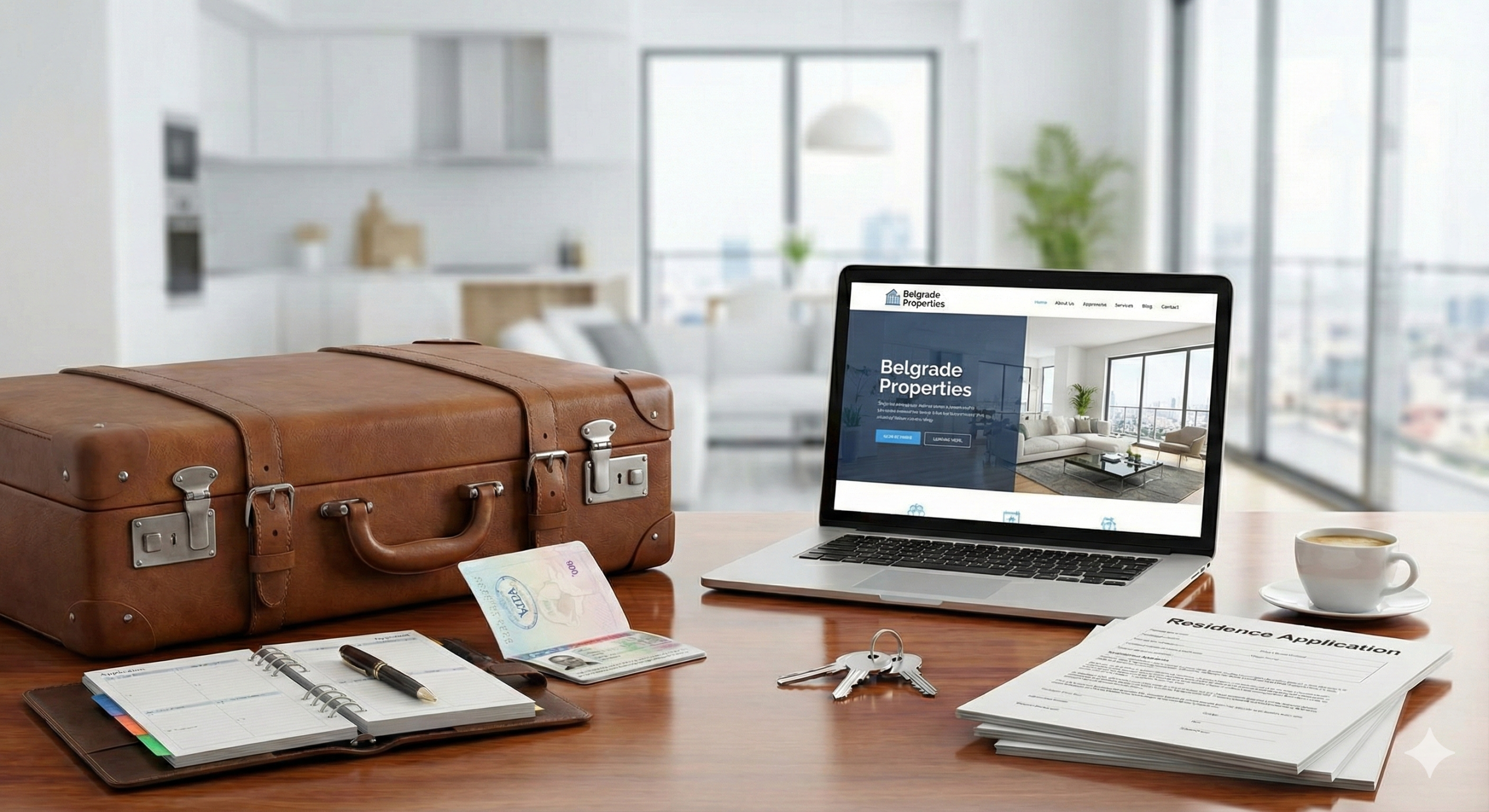
Securing a Serbian Visa: Short-Stay (C) & Long-Stay (D) is the first step, but the Temporary Residence Permit (Privremeni boravak) is what truly transforms a visitor into a long-term resident. This permit serves as your official legal anchor, granting you the right to stay, live, and integrate into Serbian society. Beyond legal status, it acts as a gateway to practical necessities—allowing you to open local bank accounts and establish a stable foundation in the Republic of Serbia.
While the “Single Permit” caters to those coming for work, this category focuses on the personal and strategic pillars of immigration: families, investors, and those choosing Serbia as their long-term base.
Legal Entry Paths to Residency
The transition to residency is determined by nationality and the specific legal framework used to enter the country:
- The Visa D Bridge: Many foreign nationals must obtain a Long-Stay Visa (D) before they can apply for residency. In cases involving visa regimes, only the Visa D acts as a valid legal “bridge”, as a Short-Stay (C) or Schengen visa is insufficient for this purpose;
- Visa-Free Entry: The majority of citizens from countries with visa-free agreements (such as the EU, UK, or USA) may enter and stay in Serbia for 30 to 90 days. Most of these citizens can apply for residency without a prior Visa D. However, certain countries with visa-free benefits still carry an obligation to obtain a Visa D for residency purposes. For example, Chinese citizens can enter for 30 days without a visa, but they must acquire a Visa D specifically to apply for residency.
- Application Flexibility: In accordance with modern standards, residency applications can be initiated electronically from abroad or within the country via the official Welcome to Serbia Portal.
Grounds for Residency
Serbian law provides a wide spectrum of grounds to accommodate various life circumstances. While all legal paths are available for consideration, certain categories are most frequently utilized:
- Family Reunification: This primary path is available for spouses and minor children of Serbian citizens or legal residents (e.g., foreign citizens with approved temporary residence). It is designed to preserve family unity, ensuring that loved ones can live together without the pressure of expiring visas.
- Real Estate Ownership: Serbia offers a welcoming environment for foreign property investors. Owning residential or commercial property that is suitable for living provides a valid ground for residency.
- Serbian Citizen Descendants: Individuals of Serbian origin (up to the third degree of direct lineage) may apply for residency, acknowledging their ancestral ties.
- Education and Language Studies: Residency can be granted for students enrolled in accredited high schools or universities, as well as those attending certified Serbian language courses.
- Additional Paths: The legal framework also includes grounds such as scientific research, medical treatment or care, religious service in recognized communities and humanitarian stays.
The Chronological Process: From Application to Residency
Upon initiating the request, it is necessary to provide a comprehensive file including: a passport valid for at least three months beyond the requested stay, proof of specific legal grounds, evidence of sufficient sustenance, and valid health insurance.
While the initial stage is digital, the process requires a minimum of two in-person visits to the Administration for Foreigners upon completion of the decision-making process: one for biometrics (fingerprints and photos) and the second to collect the final biometric ID card.
The legal timeframe for a decision is thirty days from the submission of a complete application. However, depending on the workload and the complexity of the case, the actual duration can range from one to several months.
Precision in documentation is paramount, as incomplete files are the primary cause of unnecessary delays in the decision-making process. Furthermore, maintaining a serious and timely approach to appointments is essential. While missing a scheduled meeting after the process is finalized does not “reset” the entire procedure, it does complicate final logistics and postpones the acquisition of the resident status.
Your Step-by-Step Journey to Residency
The process begins at the official Welcome to Serbia Portal, the hub for all electronic submissions. To initiate your request, you must prepare a comprehensive file including: a passport (valid for at least three months beyond your stay), proof of your specific legal grounds, evidence of sufficient sustenance, and valid health insurance. The process also involves the payment of state-mandated administrative fees and, for those already in the country, the registration of a local address (commonly known as “beli karton” / “White card”).
Your journey follows a clear chronological path:
- Electronic Filing and Fees: You submit your application and pay the state-mandated administrative fees through the digital portal.
- The Decision Phase: The legal timeframe for a decision is 30 days from the submission of a complete application. However, actual durations can range from one to several months depending on the current workload and the complexity of the case.
- Biometrics and ID Collection: Once the decision is finalized, the process requires two in-person visits to the Administration for Foreigners. During the first visit, authorities collect your biometric data (fingerprints and photos). The second visit is for the collection of your final biometric ID card.
Precision is vital. Incomplete files are the primary cause of unnecessary delays. A serious and timely approach to appointments is equally essential. While missing a scheduled meeting won’t “reset” your entire procedure, it complicates logistics and postpones your official resident status.
Building a long-term Future in Serbia: The Road to Permanent Residency
Securing a temporary residency permit is more than a legal requirement; it is about anchoring a life for years to come. For those who fall in love with the Serbian way of life, temporary status is often the first step toward a more permanent commitment.
The authorities may issue temporary residency permits for up to three years, depending on your specific grounds and the assessment of your case.
This status paves the way for Permanent Residency, which becomes an option after 3 years of continued residency in the country. During this three-year window, the law allows you flexibility to travel. You may leave Serbia once for up to six months, or make several trips totaling no more than 10 months. Securing permanent residency eventually opens the legal door to applying for Serbian citizenship.
Professional Guidance in a Complex Landscape
While the digital shift has aimed to simplify procedures, the discretionary nature of administrative assessments and strict document standards, remain significant factors. Professional assistance ensures that communication with the local authorities is handled with the required seriousness and timeliness. Having a representative who understands the local administrative culture helps in preparing a flawless file, allowing you to focus on your family, your studies, or your new home, rather than the bureaucracy.
Navigating the Bureaucratic Landscape
The shift to digital applications has simplified the initial steps, but the discretionary nature of administrative assessments remains a significant factor. Strict document standards and local administrative nuances require a precise approach.
Entrusting the process to those with a deep understanding of the local administrative culture ensures that all communication with competent authorities is handled with the required seriousness and timeliness. Professional guidance helps in preparing a flawless file and navigating the intricate layers of Serbian bureaucracy. This structured approach allows you to delegate the administrative weight, providing the peace of mind to focus entirely on your family, your studies, or settling into your new home.
Note: This text provides general information and does not constitute legal advice. For specific questions and legal advice, please consult a lawyer.

Author
Vojislav S. Dulić
Vojislav Dulić is an attorney at law born in Herceg Novi, specifically in the town of Bijela.
He successfully completed his primary and secondary education in Geneva, thus acquiring an international education and perspective that further enriches his practice. Upon returning to Serbia, he further honed his knowledge and skills by practicing law in Belgrade, where he had the opportunity to work on various complex cases at a prestigious law firm.
He further complemented his practice by working in Geneva, within various branches of law. He speaks English, French, and Italian.
He is a member of the Belgrade Bar Association.
How can we help you?
Fill out the form below to contact us.
Our team will reply as soon as possible.