SERBIAN Immigration Law & Relocation Support
Serbian Visas: Short-Stay (C) & Long-Stay (D)
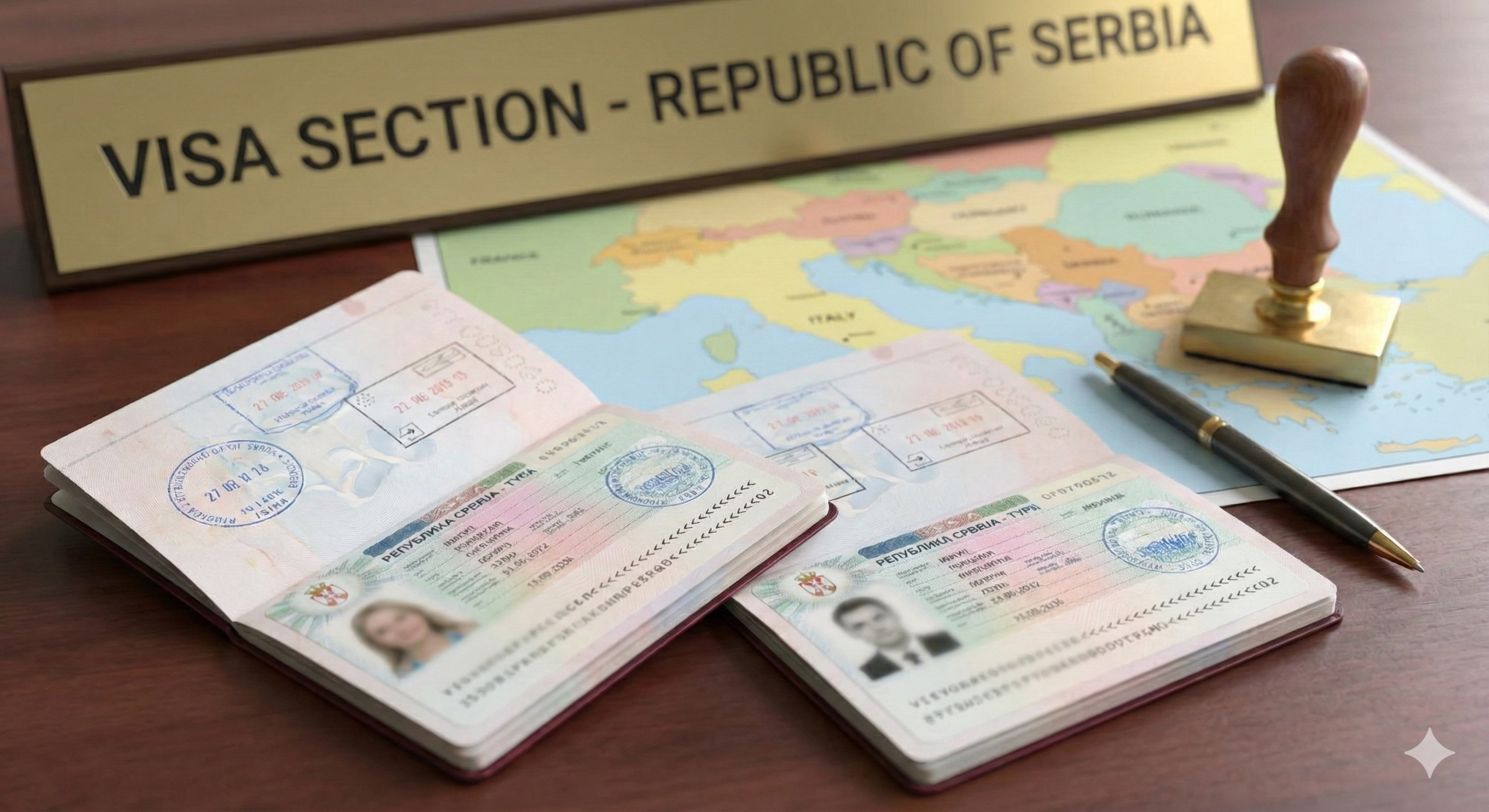
Whether you are drawn to the vibrant streets of Belgrade for a weekend getaway or are planning a full-scale relocation to the heart of the Balkans, the first gate you must pass is often the legal one. For many foreign nationals, entry into the Republic of Serbia is predicated on obtaining a formal permit: either the Short-Stay Visa (C) or the Long-Stay Visa (D).
While the process is increasingly digital, the nuances of “why” and “how” you apply remain the most critical factors for a successful arrival.
Visa C: Much More Than a “Tourist Visa”
Commonly known as the Tourist Visa, the Visa C is the primary tool for those staying up to 90 days within a 180-day period. However, its “tourist” nickname is a bit of a misnomer, as it covers a vast array of practical scenarios:
- Tourism & Leisure: Seeing the sights or enjoying Serbia’s famous hospitality.
- Business Engagements: Attending meetings, signing deals, or visiting trade fairs.
- Medical Treatment: Accessing Serbia’s specialized clinics (e.g., dental or surgical) or rehabilitation centers.
- Family & Private Visits: Reconnecting with friends or relatives living in Serbia.
- Cultural, Sport, & Science: Participating in festivals, international tournaments, or research seminars.
- Official Visits: Attending events as part of a government delegation.
General Documentation for Visa C: To ensure your short stay is approved, you generally need to provide:
- A valid passport (must expire at least 3 months after your intended departure).
- A completed application form and recent passport-sized photo.
- Proof of Purpose: An invitation letter or travel agency certificate.
- Financial Proof: Evidence of sufficient funds (bank statements) for the duration of the stay.
- Logistics: Travel health insurance, a return ticket, and proof of accommodation (hotel or host).
Visa D: The Bridge to Residency
If your goal is to stay longer than 90 days—usually as a prerequisite for a residence permit—you will need a Visa D. This permit allows a stay of up to 180 days, providing the necessary window to finalize your long-term status. Common grounds include:
- Employment: For those hired by a Serbian entity.
- Business Ownership: For founders and managers of Serbian companies.
- Real Estate: For individuals who have invested in property within the country.
- Family Reunification: For joining a spouse or parent who is a resident or citizen.
- Education: For students and researchers enrolled in Serbian institutions.
General Documentation for Visa D: In addition to standard identification, you must provide:
- Hard Evidence of Grounds: An invitation letter and a labor contract, proof of company registration (APR), property deed, or marriage certificate, etc.
- Sustenance: Proof of long-term financial stability.
- Comprehensive Health Insurance and evidence of local accommodation.
The Digital Shift: Welcome to Serbia Portal & e-Visas
The application landscape has evolved. Most requests can now be initiated online via the Welcome to Serbia portal.
Crucially, some nationalities are now eligible for an e-Visa. While traditional visas require a physical visit to a Serbian embassy to collect a sticker, the e-Visa is issued electronically, significantly streamlining the process. However, for many others, the portal is simply the first step of a process that still ends at a consular desk.
Regardless of the digital “ease,” the embassy maintains full discretionary power. They may request an in-person or online interview at any stage to verify the authenticity of your claims. This is where professional preparation of your “story” and documentation becomes vital.
Avoid the “Time Trap”
The most frequent mistake we see in practice isn’t a missing document—it’s a lack of time. Many travelers fail to account for the weeks required for consular processing and the time needed to obtain Apostilles or certified translations of foreign papers.
This oversight often leads to immense frustration or the total cancellation of a visit. It is a genuine shame when a highly anticipated trip—whether inspired by a crucial business opportunity, a long-awaited family reunion, or a personal desire to explore Serbia’s unique attractions—is derailed simply because of a calendar error. Proper planning is the only way to ensure your Serbian experience starts with a warm welcome rather than an administrative headache.
Regional Perks: Schengen & Open Balkan
- Schengen/UK/USA Privilege: Generally, if you hold a valid multiple-entry visa from the Schengen Area, the UK, or the USA, you may enter Serbia for short stays without a separate Serbian visa.
- Open Balkan Initiative: For citizens of countries within the Open Balkan agreement, the doors are even wider, often allowing work and residence with minimal hurdles compared to other third-country nationals.
Crucially, visa policies are dynamic and subject to change based on bilateral agreements. It is imperative to verify your specific requirements well before your travel date to confirm whether you must apply for a Visa C or if you qualify for any of the aforementioned exemptions.
Note: This text provides general information and does not constitute legal advice. For specific questions and legal advice, please consult a lawyer.

Author
Vojislav S. Dulić
Vojislav Dulić is an attorney at law born in Herceg Novi, specifically in the town of Bijela.
He successfully completed his primary and secondary education in Geneva, thus acquiring an international education and perspective that further enriches his practice. Upon returning to Serbia, he further honed his knowledge and skills by practicing law in Belgrade, where he had the opportunity to work on various complex cases at a prestigious law firm.
He further complemented his practice by working in Geneva, within various branches of law. He speaks English, French, and Italian.
He is a member of the Belgrade Bar Association.
How can we help you?
Fill out the form below to contact us.
Our team will reply as soon as possible.