Buying Property in Serbia? Consult a Real Estate Lawyer First
Purchasing Real Estate in Serbia: A Guide to Secure Property Acquisition
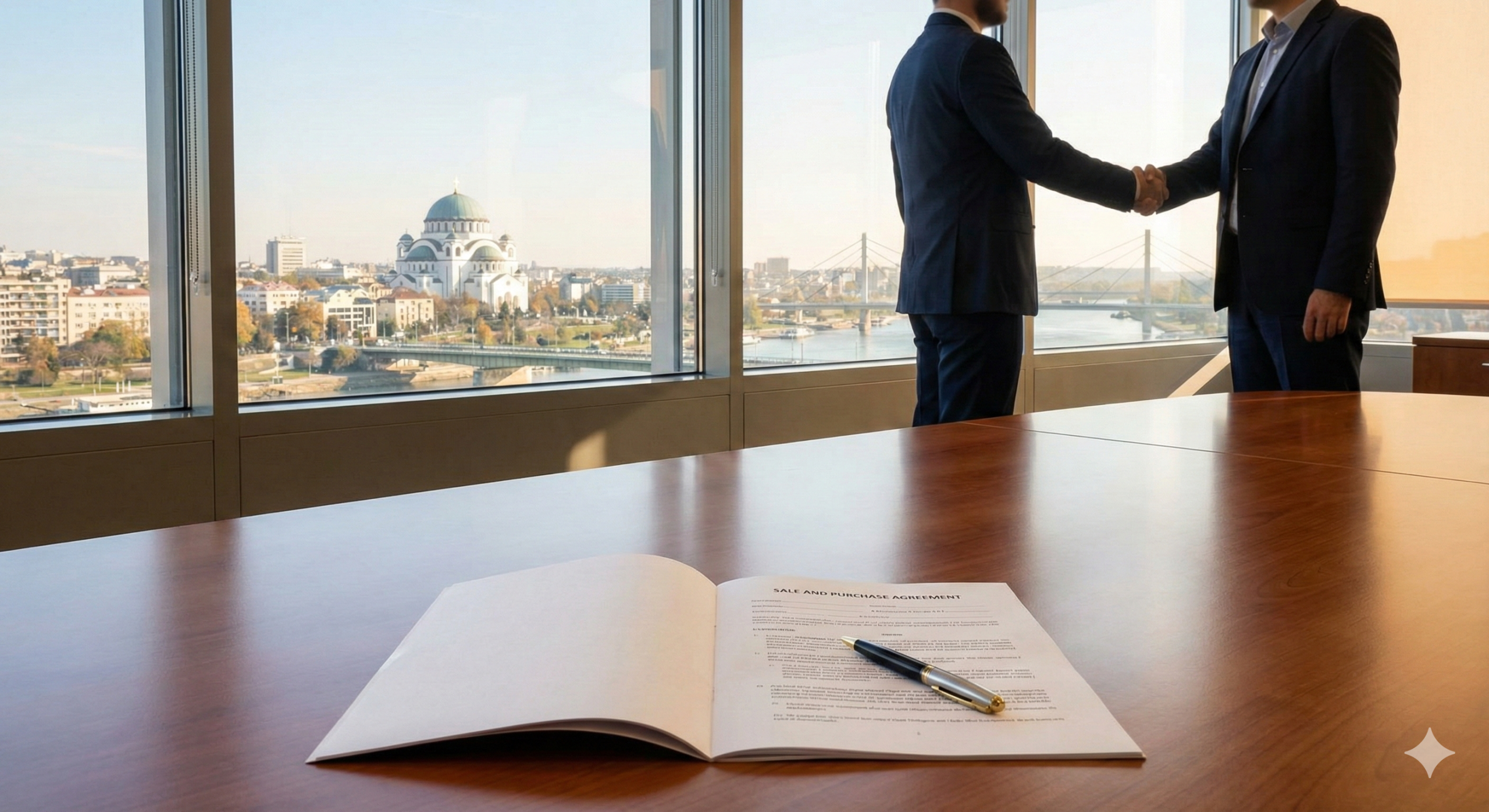
Investing in Real Estate in Serbia: A Comprehensive Guide for Domestic and Foreign Buyers
Serbia has become one of the most dynamic real estate markets in Europe, attracting:
- Foreign investors
- Diaspora buyers
- Commercial developers
- Private individuals
However, the Serbian property system operates under specific formal and administrative rules. A secure acquisition is a structured legal process — not a simple payment and signature.
🌍 Legal Reciprocity for Foreign Buyers
Foreign nationals may acquire property in Serbia under the principle of reciprocity, depending on their home country’s treatment of Serbian citizens.
Different rules apply to:
- Residential and commercial buildings: Foreigners are typically permitted to own residential and commercial buildings under the condition of reciprocity
- Construction land: Ownership is generally allowed, especially when connected to an existing or planned building
- Agricultural land: Direct ownership by foreign natural persons is generally restricted, though exceptions exist under specific international agreements or when property is held through a Serbian-registered legal entity
Improper structuring may invalidate ownership or block registration.
🔍 Phase 1: Legal Due Diligence (The Verification)
The most critical stage of any property acquisition is due diligence (verification).
This includes:
- Confirming registered ownership
- Checking for mortgages and liens
- Identifying pending disputes
- Verifying building permits and occupancy permits
- Examining legalization status
Properties listed as “in the process of legalization” carry specific legal risks that require careful evaluation.
Due diligence protects buyers from acquiring hidden liabilities.
💰 Phase 2: Pre-Contract and Deposit (Kapara)
Following due diligence, the parties enter the final negotiation phase by signing a notarized Pre-Contract (Predugovor). While not strictly mandatory, it is highly recommended as it provides a critical layer of legal security.
Legal Stability:
A notarized Pre-Contract legally obligates both parties to execute the main agreement.
If one party refuses to sign without legal grounds, the other may initiate court proceedings where a judicial verdict can substitute the breaching party’s signature. This prevents financial damages, such as lost time and legal fees.
Defining the Deal:
The primary object of a Pre-Contract is the legal obligation of both parties to conclude the Main Contract within a strictly set deadline.
At this stage, it is crucial to clearly define all essential elements of the future transaction—such as the final purchase price, property description, and payment terms—as they form the mandatory framework for the final transfer of rights.
The “Kapara” (10% Deposit):
During this stage, the buyer typically pays a deposit, which serves as a guarantee. Under Serbian law:
Buyer Default: If the buyer withdraws without legal cause, the seller retains the deposit.
Seller Default: If the seller withdraws, they are legally required to return double the deposit to the buyer.
Precise structuring of these deposit clauses is vital to prevent misinterpretation and shield your investment from the very beginning.
✍️Phase 3: Notary Solemnization of the Main Contract
In Serbia, a real estate sale is legally valid only after solemnization of the main contract before a Public Notary.
- Mandatory Form: The notary ensures the parties have legal capacity and the contract meets all strict formal requirements.
- Court Interpreters: Foreign buyers who do not speak Serbian must be assisted by a certified court interpreter by law. Without this, the notary will not sign the document.
Because the Main Contract represents the final transfer of ownership, it must strictly align with the essential elements previously established in the notarized Pre-Contract.
- Consistency is Key: It is vital that the Main Contract contains the same fundamental terms as the Pre-Contract to ensure legal continuity and validity before the Notary and the Cadastre.
- The Annex Requirement: Should any changes to the deal occur between these two phases (e.g., price adjustments or deadline extensions), a notarized Annex to the Pre-Contract must be executed first. Only once the Pre-Contract is formally amended can the Main Contract be solemnized with the updated terms.
Professional preparation before the notary appointment prevents delays and costly corrections.
📑Phase 4: Payment and Compliance
Bank Transfers: Payments exceeding €10,000 must be conducted via bank transfer to comply with Anti-Money Laundering (AML) regulations.
Foreign buyers may need:
- Non-resident bank accounts
- Documentation on source of funds
- Compliance with anti-money laundering regulations
Tax implications: This is a high-search area where professional guidance saves thousands of euros.
- Property Transfer Tax (2.5%): Generally paid on the transfer of used properties.
- VAT (10%): Applicable to new constructions (first-time sale).
- Tax Exemptions: First-time buyers (Serbian citizens) may be eligible for tax relief on a specific number of square meters.
🔑 Phase 5: Clausula Intabulandi & Registration
The transaction is not over until the buyer is registered in the Cadastre (Katastar).
- The “Clausula”: Once the full price is paid, the seller issues a clausula intabulandi—unconditional consent for the buyer to register ownership.
- Official Registration: The Notary typically submits the documents to the Cadastre electronically, but active monitoring is required to ensure the title is successfully recorded.
✈️ Remote Transactions: Buying via Power of Attorney
You do not need to be physically present in Serbia to buy property. Through a Special Power of Attorney (POA), law office can manage the entire journey for you:
- Conducting full Due Diligence
- Signing pre-contracts and final agreements
- Attend notary solemnization
- Handling tax filings and Cadastre registration.
This enables foreign international investors and the diaspora to complete acquisitions without physical presence, from anywhere in the world with the same level of legal rigor as if they were present in person.
🏛️ Risk Management and Long-Term Protection
Real estate is a capital-intensive investment where errors are costly.
While the buyer often faces more exposure during the acquisition process, sellers also frequently require professional guidance. Selling a property can involve complex hurdles, such as resolving historic inheritance issues (probate), clearing unexpected liens discovered during the buyer’s due diligence, or navigating the specific tax implications of a high-value sale.
Legal precision ensures that the asset you purchase today remains secure decades later.
Engaging with experienced representatives ensures that the transaction remains stable and legally sound for both parties. Proper navigation of these administrative layers ensures that your investment is secured from the initial verification to the final registration in the civil records.
Note: This text provides general information and does not constitute legal advice. For specific questions and legal advice, please consult a lawyer.

Author
Vojislav S. Dulić
Vojislav Dulić is an attorney at law born in Herceg Novi, specifically in the town of Bijela.
He successfully completed his primary and secondary education in Geneva, thus acquiring an international education and perspective that further enriches his practice. Upon returning to Serbia, he further honed his knowledge and skills by practicing law in Belgrade, where he had the opportunity to work on various complex cases at a prestigious law firm.
He further complemented his practice by working in Geneva, within various branches of law. He speaks English, French, and Italian.
He is a member of the Belgrade Bar Association.
How can we help you?
Fill out the form below to contact us.
Our team will reply as soon as possible.