Inheriting Property in Serbia: How to Navigate the Probate Process with Ease
Probate Proceedings in Serbia: A Guide to Settling an Estate

From Asset Discovery to Final Settlement: Ensuring a Smooth Legal Transition for Local and Foreign Heirs
Settling an estate in Serbia is a structured process designed to balance strict legal formalities with the sensitive nature of family legacy. Whether you are a local resident or a foreign heir, understanding the Probate Proceeding (Ostavinski postupak) is essential to ensuring a smooth transfer of assets and protecting your legal rights.
📜 Defining the Estate: What is (and Isn’t) Inherited?
Before the process begins, it is crucial to identify what constitutes the deceased’s assets. In Serbia, the estate consists of all inheritable rights and claims that belonged to the deceased at the moment of death.
- What is Included: This includes real estate, bank holdings, vehicles, and even claims against other heirs. For the purpose of calculating the “forced portion” (nužni deo), the value of certain gifts made during the deceased’s lifetime may be added back into the total calculation.
- What is Excluded: Daily household items (furniture, linens) used by the spouse or descendants living with the deceased are generally excluded. Additionally, property covered by a valid Life-Care Contract or assets increased by the specific labor of descendants living in a community with the deceased may be exempt from the general estate.
👥 Who Inherits? Understanding Succession Rows
Serbia follows a system of inheritance rows (nasledni redovi). Closer relatives exclude more distant ones:
- First Row: The deceased’s children and spouse, who typically inherit in equal shares.
- Second Row: If there are no children, the spouse inherits half, and the deceased’s parents (or their descendants) inherit the other half.
- Third and Fourth Rows: Include grandparents and their descendants, followed by great-grandparents.
- Forced Heirs: Specific close relatives are entitled to a forced portion (nužni deo), ensuring they are not entirely excluded by a Will, unless they are legally deemed “unworthy” of inheriting.
- The Republic of Serbia: If no other legal heirs exist, the state is the final legal successor.
⚖️ The Probate Process: From Initiation to Ruling
The process officially begins when a death is recorded and a Public Notary (Javni beležnik) is assigned by the court as a commissioner to handle the case.
- Asset Discovery and Inventory: A formal appraisal of all property, claims, and debts is conducted. This often includes a search of the Real Estate Registry (Katastar) and bank records.
- The Inheritance Statement (Naslednička izjava): This is the most critical stage of the hearing. The statement is indivisible and absolute, meaning it follows an “all or nothing” principle:
- Positive or Negative: An heir may either accept the inheritance in its entirety or renounce it completely. It is legally impossible to accept only certain assets (like real estate) while rejecting others (like debts).
- Ceding a Share: If you decide to “cede” or transfer your inheritance share to another heir, the law treats this as an acceptance of the share followed by an immediate gift.
- Tax Implications: Because ceding a share is legally classified as a gift, it can trigger gift tax obligations. This double-action (accepting and then gifting) may lead to different tax consequences than a simple renunciation, and it is vital to assess this risk before the hearing.
- Liability for Debts: Heirs are liable for the deceased’s debts, but only up to the total value of their inherited share.
🚩 When Does Litigation Occur?
While most probate cases are settled smoothly, certain disputes can halt the probate proceeding and lead the parties to civil litigation.
Common Reasons for Litigation include:
- Contesting the validity of Will: If an heir claims a Will is a forgery, or that it was made under threat, fraud, or during a lack of capacity to reason.
- Disputing the Estate’s Size: When there is a disagreement over whether a specific property belongs to the deceased or was increased by the labor of a descendant.
- Violation of the “Forced Portion”: If an heir’s mandatory share has been violated by gifts or testamentary dispositions.
- Unworthiness: If an heir is accused of intentionally killing the deceased or preventing their final will.
In cases involving minors, the Social Work Center must be notified to oversee the protection of the child’s interests.
🌍 Remote Probate: Support for Foreigners and Expats
One of the most frequent questions for foreigners and expats is whether they must travel to Serbia to settle an estate. The answer is no. Through a specialized Power of Attorney (POA), the entire process—from asset discovery to the final ruling—can be managed remotely.
A legal representative in Serbia can act on your behalf to
Verify Status: Checking official records to confirm if a death has been registered or if a probate proceeding has been initiated.
Asset Search: Proactively searching for the deceased’s real estate, bank holdings, “hidden” assets or other inheritable rights.
Verify Succession Claim: Determining your status as a legal heir or your eligibility for a “forced portion” based on the mandatory rules of succession.
Full Process Management: Formally initiate and conduct the probate hearing, provide the inheritance statement on your behalf and protect your rights until the matter is settled.
🏛️ Professional Perspective: Why Dulić Law Office Emphasizes Proactive Estate Management
At Dulić Law Office, we believe that the final settlement of an estate should be a path to family stability, not a source of conflict. We highlight the importance of:
- Tax and Strategic Planning: Analyzing the impact of your inheritance statement to avoid unnecessary gift taxes or debt liabilities.
- Immediate Shielding: Taking swift action to secure the estate’s inventory before assets can be mismanaged.
- Expert Coordination: Working closely with the Public Notary and Social Work Center to ensure a legally sound and efficient process.
- Remote Investigation: Providing foreign heirs with total clarity and legal certainty, allowing them to manage their legacy in Serbia from anywhere in the world.
Note: This text provides general information and does not constitute legal advice. For specific questions and legal advice, please consult a lawyer.
Author
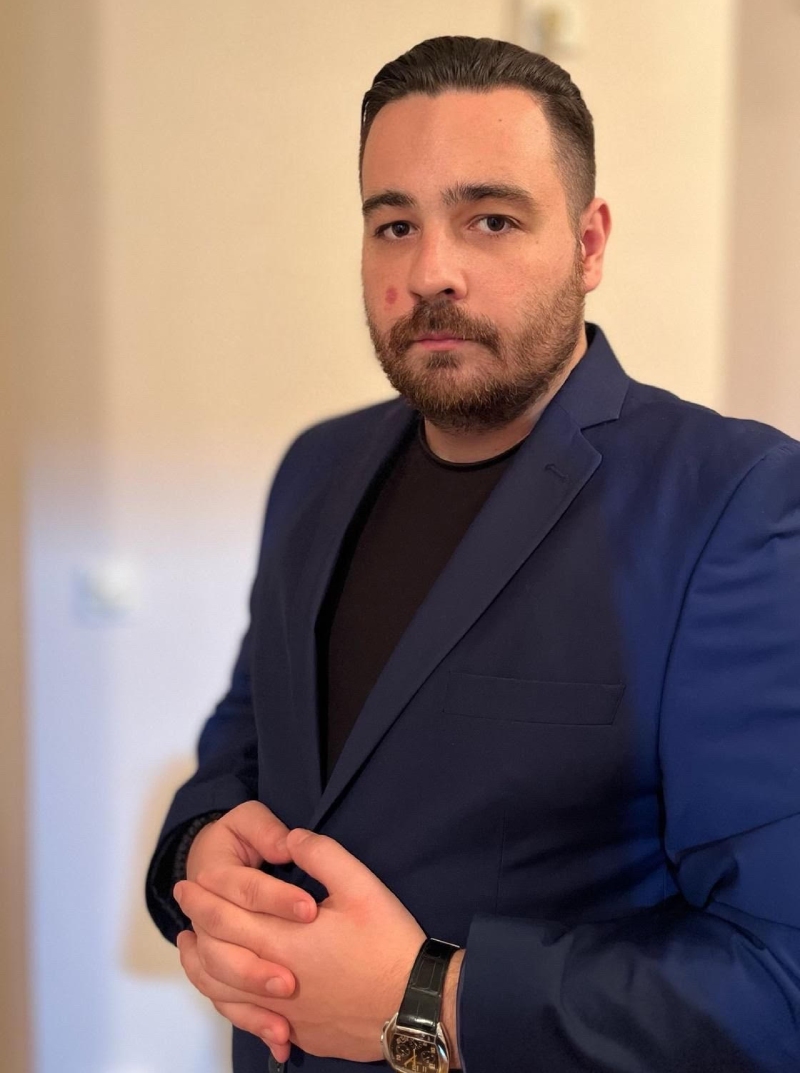
Vojislav S. Dulić
Vojislav Dulić is an attorney at law born in Herceg Novi, specifically in the town of Bijela.
He successfully completed his primary and secondary education in Geneva, thus acquiring an international education and perspective that further enriches his practice. Upon returning to Serbia, he further honed his knowledge and skills by practicing law in Belgrade, where he had the opportunity to work on various complex cases at a prestigious law firm.
He further complemented his practice by working in Geneva, within various branches of law. He speaks English, French, and Italian.
He is a member of the Belgrade Bar Association.
How can we help you?
Fill out the form below to contact us.
Our team will reply as soon as possible.