Reputation at Risk? A Lawyer’s Guide to Defamation Lawsuits in Serbia
Defamation in Serbia: A Professional Guide to Reputation Damage Claims
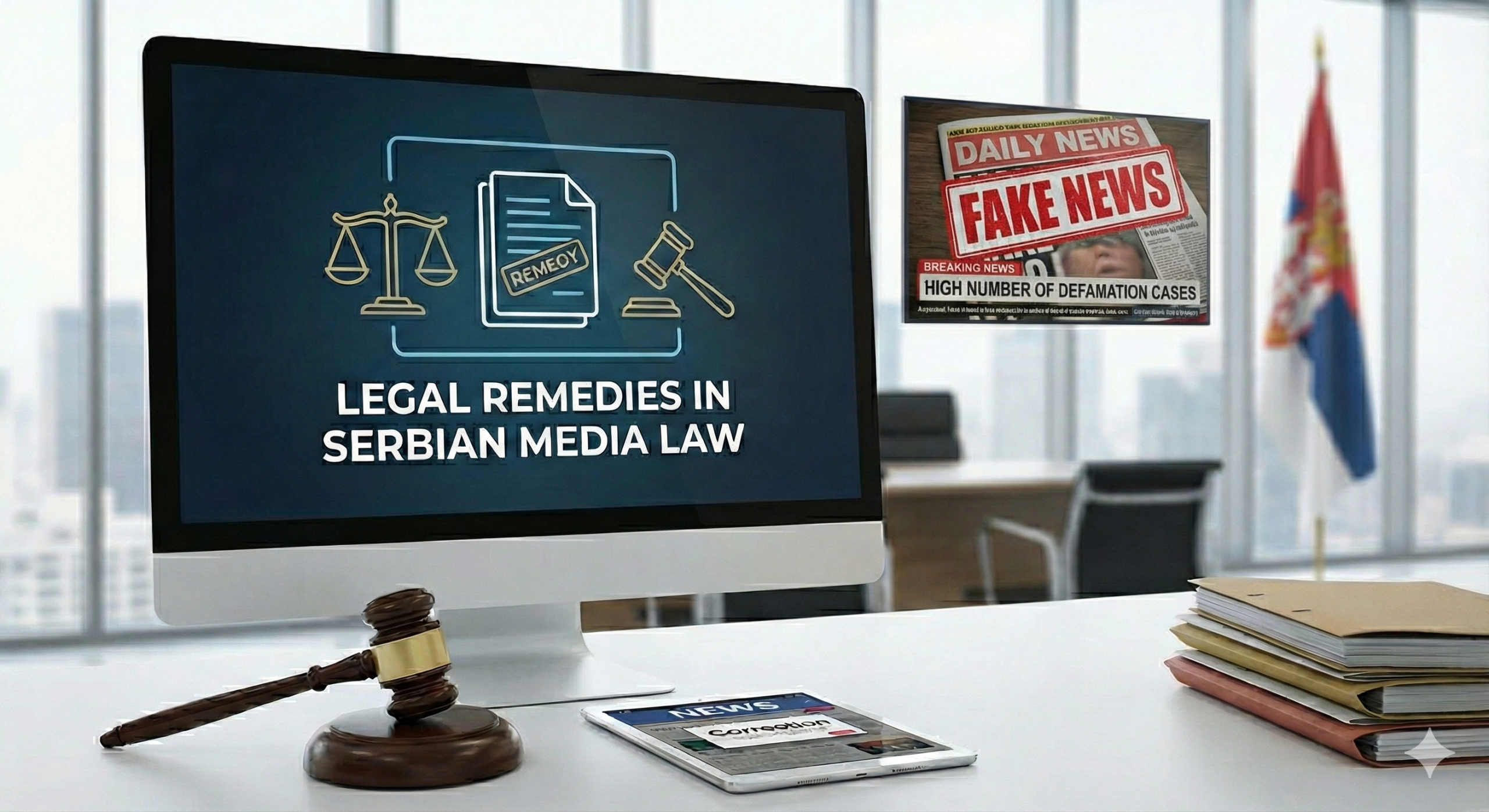
In the previous section, Individual Rights vs. Press Freedom under Serbian Media Law we defined the core rights that safeguard personal integrity.
When a media outlet publishes inaccurate or harmful content and crosses these boundaries, the Law on Public Information and Media provides a structured path for redress, moving from immediate corrections to formal litigation and financial compensation.
Rapid Redress: The Right of Reply and Correction
For cases where published information is untrue, incomplete, or incorrectly conveyed, there are immediate statutory tools to amend the public record:
- The Right of Reply:
A legal right to demand the publication of a response, free of charge, in which the truthfulness or completeness of the original information is contested.
- The Right to Correction:
If a person’s rights are violated by inaccurate information, the law permits a lawsuit to compel the publication of a formal correction.
- Strict Timeframes:
The legal window to request a reply is typically 30 days for daily media and 60 days for periodicals.
- Equal Prominence:
The law mandates that the reply or correction be published with “equal effectiveness,” meaning it must appear in the same part of the media, on the same page, and with the same prominence as the original story.
- No Simultaneous Commentary:
Editors are prohibited from commenting on the reply or correction in the same issue or broadcast in which it appears.
Defamation Lawsuits & Financial Damages
When out-of-court requests—like a reply or correction—fail or are ignored, the next step is formal litigation. A defamation lawsuit empowers you to secure immediate injunctions and claim full financial damages:
- Defamation Injunctions & Content Removal:
A court can order removal or destruction of the offending material, such as retraction. Furthermore, plaintiffs can request a temporary injunction prohibiting the media outlet from republishing the harmful information while the legal dispute is ongoing.
- Claiming Damages: Material vs. Non-Material:
Media publishers bear strict (objective) liability for publishing prohibited content. The injured party has the right to claim two types of compensation:
- Material Damages: Compensation for financial losses resulting from the defamatory publication (e.g., costs of psychological support, lost salaries in the case of a dismissal due to the published information, or other direct out-of-pocket expenses).
- Non-Material Damages: Compensation for intangible personal harm, including financial compensation for mental anguish suffered due to violated honor, reputation, and other personal rights.
- Strict Filing Deadlines:
A lawsuit for damages must be filed within a strict deadline of six months from the date the harmful information was published. Missing it results in the loss of your right to claim financial compensation.
Conclusion: The Importance of Immediate Action
In Serbian media law, speed is a strict legal requirement. Strict “expiration dates” apply and missing narrow deadlines can lead to the permanent loss of the right to clear your name.
Engaging a professional immediately is the best way to ensure interests are protected before these highly technical legal windows close.
Note: This text provides general information and does not constitute legal advice. For specific questions and legal advice, please consult a lawyer.
Author
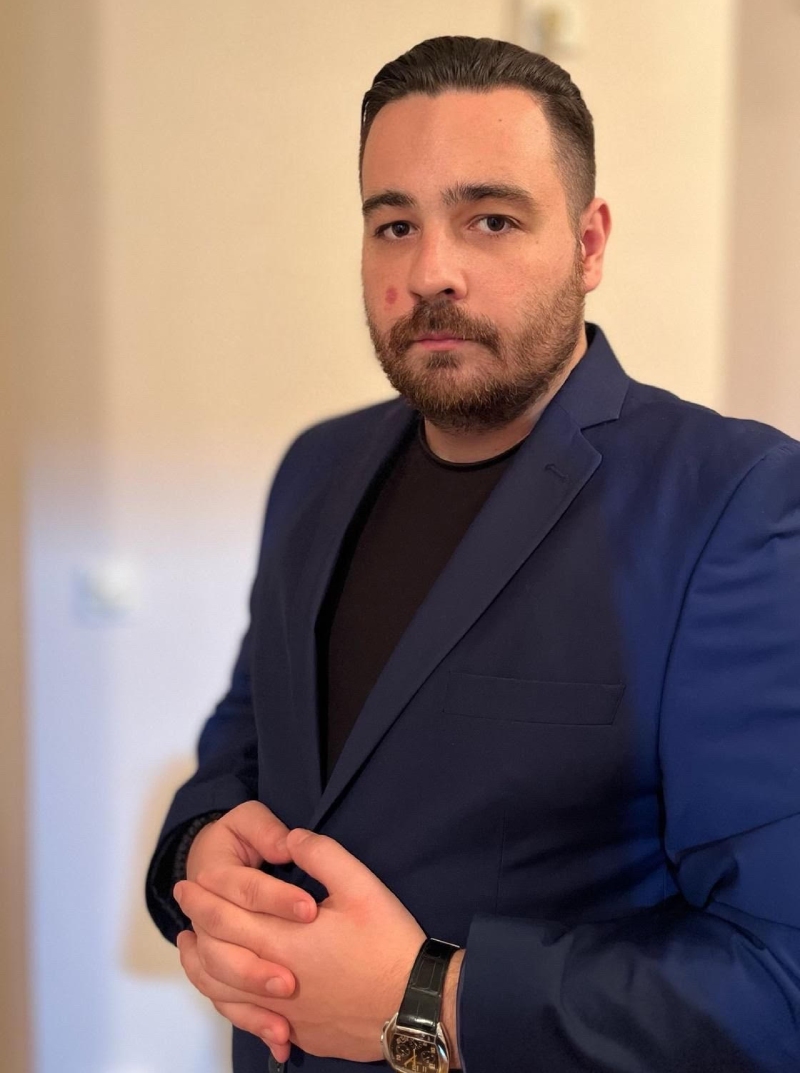
Vojislav S. Dulić
Vojislav Dulić is an attorney at law born in Herceg Novi, specifically in the town of Bijela.
He successfully completed his primary and secondary education in Geneva, thus acquiring an international education and perspective that further enriches his practice. Upon returning to Serbia, he further honed his knowledge and skills by practicing law in Belgrade, where he had the opportunity to work on various complex cases at a prestigious law firm.
He further complemented his practice by working in Geneva, within various branches of law. He speaks English, French, and Italian.
He is a member of the Belgrade Bar Association.
How can we help you?
Fill out the form below to contact us.
Our team will reply as soon as possible.