An Attorney’s Guide to Copyright & Infringement in Serbia by Dulić Law Office
Copyright Protection in Serbia: Infringement, Litigation & Damage Claims
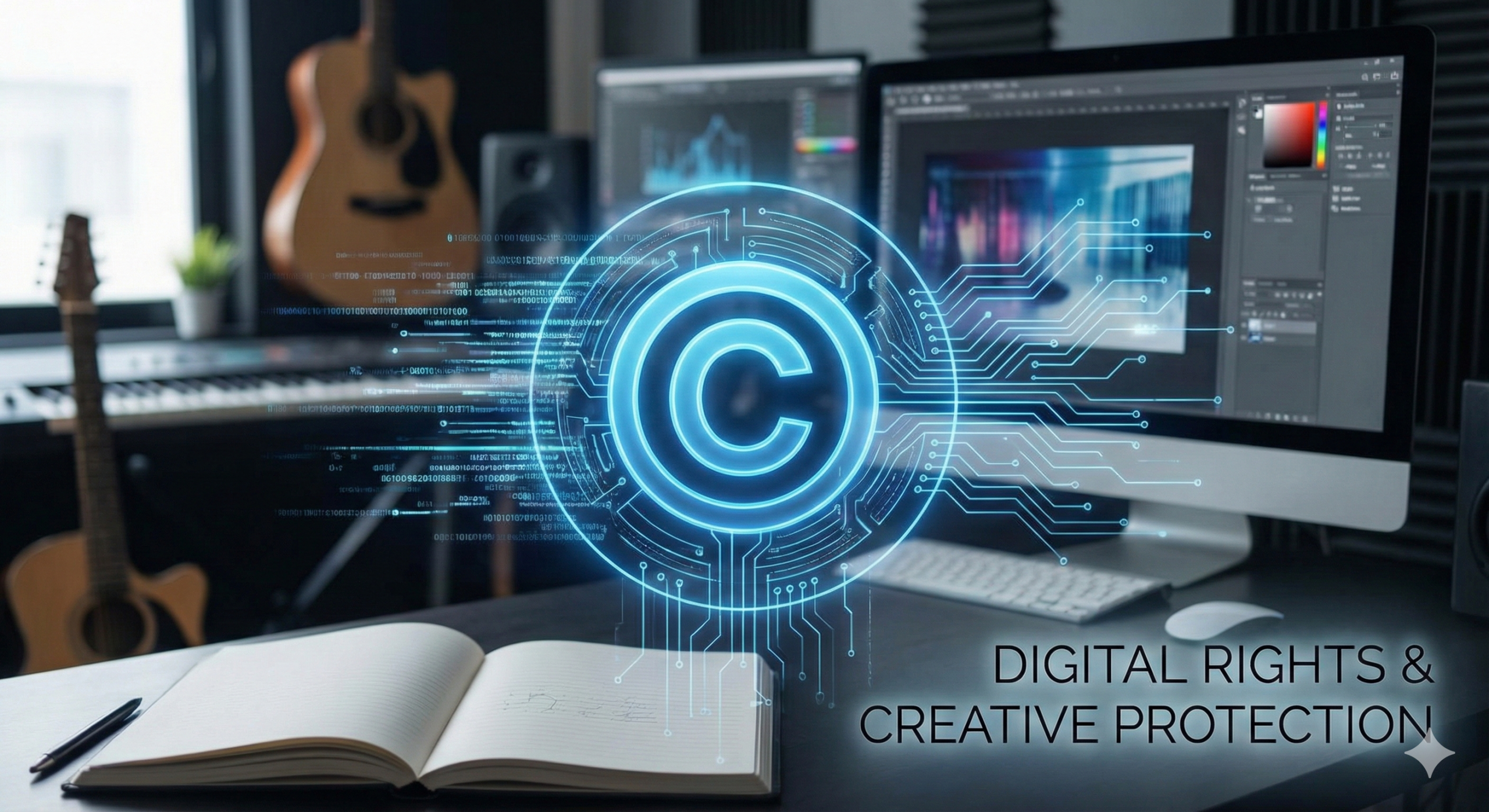
Copyright protection is automatic, but in today’s digital reality, it is rarely self-executing.
Whether you are a creator protecting your software and media campaigns, or a business collaborating with authors, this guide is your roadmap to compliance.
We break down the mechanisms you need to successfully claim infringement damages and the protocols required to ensure you avoid costly risks of unintentional infringement in an interconnected world.
1. Instant Ownership: The “Automatic” Rule of Copyright
One of the most practical features of Serbian law is that copyright is established automatically upon the creation of the work.
- No Mandatory Registration: You do not need to submit forms to a government office or pay a fee to own your work. Writing it down, coding it, or recording it establishes you as the copyright holder.
- Voluntary Deposit: Proving ownership in court presents a distinct legal challenge. Voluntarily depositing work with the Intellectual Property Office of Serbia establishes a verifiable “timestamp,” which provides critical evidence against subsequent ownership claims.
2. Copyright & Employment: Work (Made) For Hire
Conflicts frequently arise regarding works created during employment. Serbian law provides a specific framework for these situations:
- General Rule: If an employee creates something as part of their job duties, the employer holds the economic rights for a period of five years. Rights revert to the employee after this term, unless a written contract specifies otherwise.
- The IT Sector Exception: For software, the law strictly favors the employer, granting them permanent rights to ensure business continuity without a five-year “expiration date”.
- Employment Contracts: A well-drafted employment contract is essential to establish clear ownership boundaries and prevent disputes.
3. Transferring Intellectual Property Rights: Author’s Contracts & “Fair Use”
Selling, buying, or licensing creative works in Serbia requires strict adherence to legal formalities. To ensure a transfer is legally sound, you must distinguish between the types of rights and the mandatory form of the agreement.
Understanding Your Rights
- Moral Rights: You always remain the author. These rights—such as the right to be recognized or to protect the work’s integrity—cannot be sold or transferred.
- Economic Rights: These are the only rights you can commercially assign to others to generate revenue from the work.
Author’s Contract (Autorski ugovor): Essentials
- Mandatory Written Form: In Serbia, a transfer is only valid if executed in writing. Verbal agreements or casual emails offer insufficient protection in court.
- Three Pillars of the Agreement: Every contract must explicitly define:
- Territory: Where the work can be used.
- Duration: How long the rights are granted.
- Scope: Exactly how the work will be utilized.
- The “Author’s Advantage”: If a contract is vague, Serbian courts generally interpret the terms in favor of the author, not the buyer.
The “Fair Use” Exception
- Limited Scope: You may use copyrighted work without a license only under specific, narrow justifications, such as educational use, parody, or news reporting.
- Strict Interpretation: Serbian law interprets these exceptions very narrowly.
- High Legal Risk: Relying on “Fair Use” without professional guidance is risky; incorrect assumptions can lead to severe financial penalties and permanent reputational damage.
4. The Copyright Lawsuit: Injunctions & Damage Claims
Infringement generally occurs when your work is used without authorization, or when a user refuses to pay the required licensing fees.
Typical violations in the Serbian market include unauthorized reproduction (e.g., copying software), plagiarism, public communication (e.g., playing music without a license), unauthorized modification, or commercial exploitation (e.g., publishing a photo without permission).
When out-of-court negotiations fail, the next step is formal litigation. Filing a copyright lawsuit allows you to secure immediate injunctions and claim full financial compensation:
Injunctions & Content Removal:
To stop ongoing harm, courts can issue immediate orders (provisional measures) to halt the infringing activity (e.g., the removal of unauthorized digital content, seizing pirated goods, or strictly prohibiting further use of the work).
Financial Redress (Damages):
Copyright holders are entitled to claim two distinct types of compensation:
- Material Damages: Recovery of actual financial losses (e.g., lost profits, lost sales, or the exact equivalent of the licensing fees the infringer should have paid).
- Non-Material Damages: Financial compensation for the violation of moral rights, i.e., financial compensation for mental anguish suffered due to failing to attribute the author, altering the work without consent, or damaging the creator’s professional reputation.
Conclusion: Proactive Protection
Ensuring proper ownership structures during employment and utilizing clear, written agreements for every transfer of rights is critical. This approach prevents common legal traps in the Serbian market and maintains control over creative and financial investments.
Note: This text provides general information and does not constitute legal advice. For specific questions and legal advice, please consult a lawyer.

Author
Vojislav S. Dulić
Vojislav Dulić is an attorney at law born in Herceg Novi, specifically in the town of Bijela.
He successfully completed his primary and secondary education in Geneva, thus acquiring an international education and perspective that further enriches his practice. Upon returning to Serbia, he further honed his knowledge and skills by practicing law in Belgrade, where he had the opportunity to work on various complex cases at a prestigious law firm.
He further complemented his practice by working in Geneva, within various branches of law. He speaks English, French, and Italian.
He is a member of the Belgrade Bar Association.
How can we help you?
Fill out the form below to contact us.
Our team will reply as soon as possible.