How to Acquire Serbian Citizenship: A 2026 Guide by Dulic Law Office
Acquisition of Serbian Citizenship: Legal Guide for Foreigners
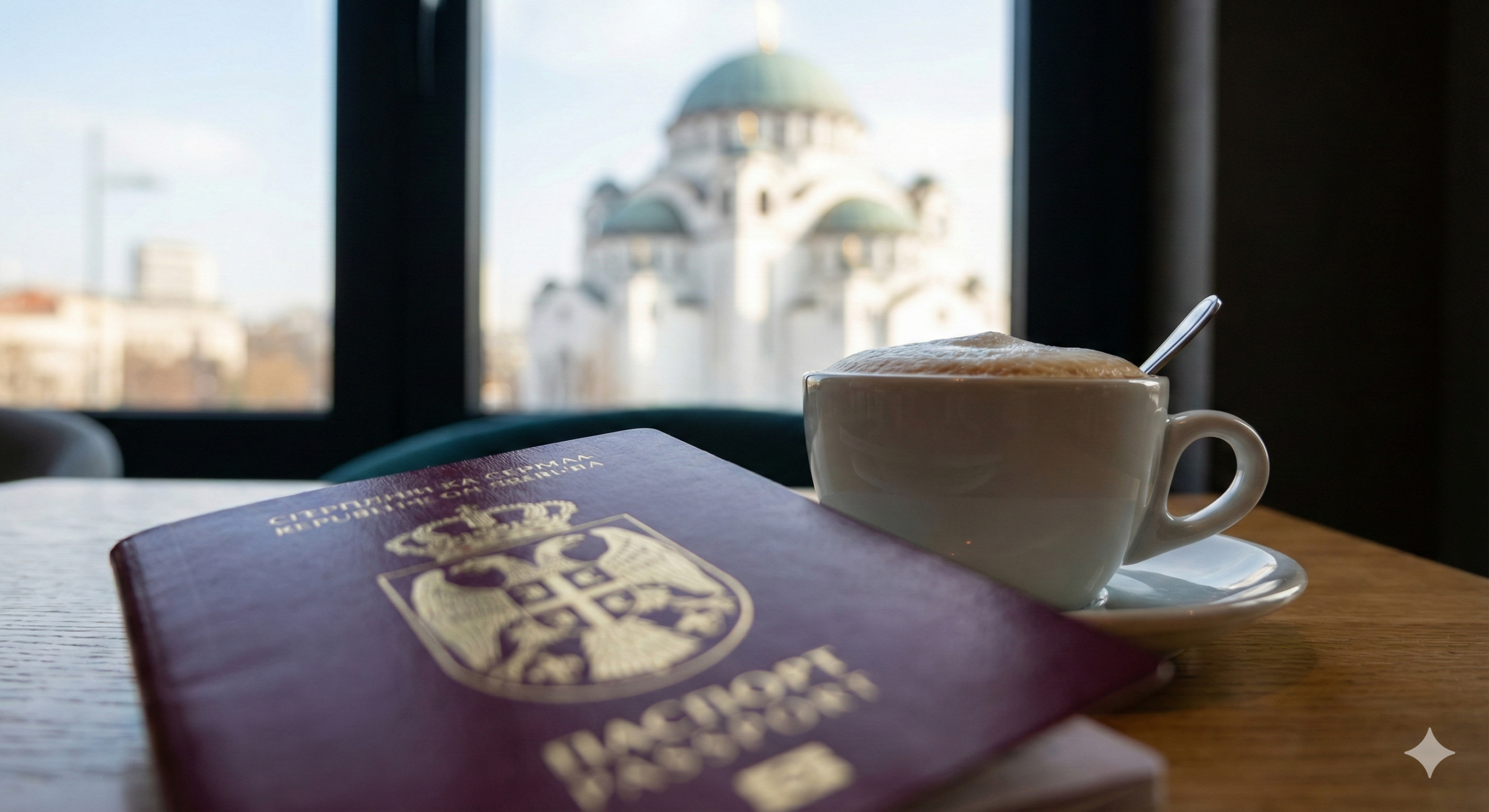
Securing a Serbian passport in 2026 is more than a residency upgrade—it is a gateway to one of Europe’s most dynamic emerging hubs. Whether you are claiming citizenship by descent, marriage, or naturalization, the legal path demands absolute administrative precision. In this guide, we walk you through the essential requirements, incorporating insights from our work with foreign nationals to help you navigate the Serbian administrative landscape with clarity.
Legal Grounds for Citizenship
Serbian law recognizes four primary methods of acquisition: Origin, Birth on Serbian Territory, Admission (Naturalization), and International Agreements. Within these categories, the most common practical grounds for admission include:
- Origin (Ancestry): Individuals whose parents were Serbian citizens at the time of their birth can acquire citizenship by origin, regardless of their place of birth;
- Permanent Residency: Foreign nationals who have held permanent residency for at least three years and maintain a registered address in Serbia may apply for citizenship;
- Marriage: A foreign national married to a Serbian citizen for at least three years, who has also been granted permanent residency, is eligible for admission;
- Serbian Emigrants and Their Descendants: Emigrants from Serbia and their descendants can be admitted to citizenship without necessarily residing in Serbia, provided they are at least 18 years old and submit a written statement considering Serbia their country;
- Interest of the Republic of Serbia (CBE): In exceptional cases, the government may grant citizenship to individuals whose admission represents a specific state interest, such as in the fields of science, sports, or business;
- Members of the Serbian Nation Abroad: Members of the Serbian people living abroad, as well as refugees and displaced persons from the former SFRJ, have specific paths to citizenship based on their ethnic ties and historical context;
Rediscovering Your Serbian Roots
Family legends of Serbian ancestors are often more than just stories—they are potential gateways to citizenship. If heritage is suspected, a professional look beneath the surface can turn a vague memory into a solid legal reality. Your history might be your strongest legal asset – don’t let it go unexplored.
Distance is no longer a barrier. Remote legal assistance allows for the verification of Serbian archives and state records without your physical presence. This process confirms if a viable claim exists, often turning even fragmentary data into vital evidence. The following records frequently serve as the foundation for a professional legal review
- Old passports or ID cards
- Military booklets or old birth certificates
- Immigration visas or ship manifests
- Passenger lists, declarations of intention, or naturalization certificates from the country of immigration
Acquiring professional assistance for an initial case assessment allows for a thorough exploration of these possibilities and ensures the determination of the most effective next steps for a potential application.
The Application Procedure: From Submission to Registration
The path to citizenship is a formal legal process that requires absolute precision in documentation and timing.
How to Initiate the Process: Applications can be submitted personally at a competent Serbian Embassy or Consulate abroad. Alternatively, for those living abroad, the process can be initiated remotely within Serbia through a specialized Power of Attorney (PoA). Initiating the process within Serbia often results in a shorter processing time, as the applicant or their representative maintains a registered address for faster official communication.
Required Documentation: While requirements vary by case, the foundational file typically includes:
- Identification: A copy of a valid passport or ID
- Birth Certificate: An original certificate from the country of birth (issued within the last six months, property legalized), with a court-certified translation
- Marriage Certificate: If applicable, an original certificate from the country of marriage (issued within the last six months, property legalized) with a certified translation.
- Citizenship Certificate: Proof of current nationality
- Proof of Specific Grounds: This includes evidence of ties with an ancestor, proof of birth on Serbian soil for emigrants, or evidence of the required period of permanent residency
- Administrative Fee: Proof of payment for state-mandated fees
The Decision and Final Steps: The Ministry of Interior manages the assessment. Once a decision is reached, a formal decree is issued.
The process of becoming Serbian citizen is finalized upon the registration of the citizenship fact in the Serbian Civil Registry, which then allows the individual to apply for a Serbian passport and ID card.
Strategic Preparation: Avoiding the “Incomplete File” Trap
Although the law provides clear paths, significant delays often occur in the decision-making process. The most common cause is the submission of incomplete or incorrectly legalized documentation.
When a file is missing a required certificate or translation, the application is typically returned to the original point of submission for supplementation. This triggers a cycle where documents travel between different administrative units, adding months to the overall timeline. In cases where the missing information is not provided within a specific timeframe, the application may be rejected entirely, leading to a loss of time and non-refundable fees.
The Value of Professional Oversight
A thorough assessment of a specific case before submission is crucial. Navigating the nuances of international document validity requires a meticulous approach. Expertise in managing communication with the competent authority ensures that an application is complete, legally sound, and positioned for a smooth process.
Note: This text provides general information and does not constitute legal advice. For specific questions and legal advice, please consult a lawyer.

Author
Vojislav S. Dulić
Vojislav Dulić is an attorney at law born in Herceg Novi, specifically in the town of Bijela.
He successfully completed his primary and secondary education in Geneva, thus acquiring an international education and perspective that further enriches his practice. Upon returning to Serbia, he further honed his knowledge and skills by practicing law in Belgrade, where he had the opportunity to work on various complex cases at a prestigious law firm.
He further complemented his practice by working in Geneva, within various branches of law. He speaks English, French, and Italian.
He is a member of the Belgrade Bar Association.
How can we help you?
Fill out the form below to contact us.
Our team will reply as soon as possible.