

Business Indemnity & Litigation in Serbia: Securing Your Company’s Financial Future
Commercial Damage and Business Litigation: Recovering Lost Profits and Contractual Damages for Legal Entities
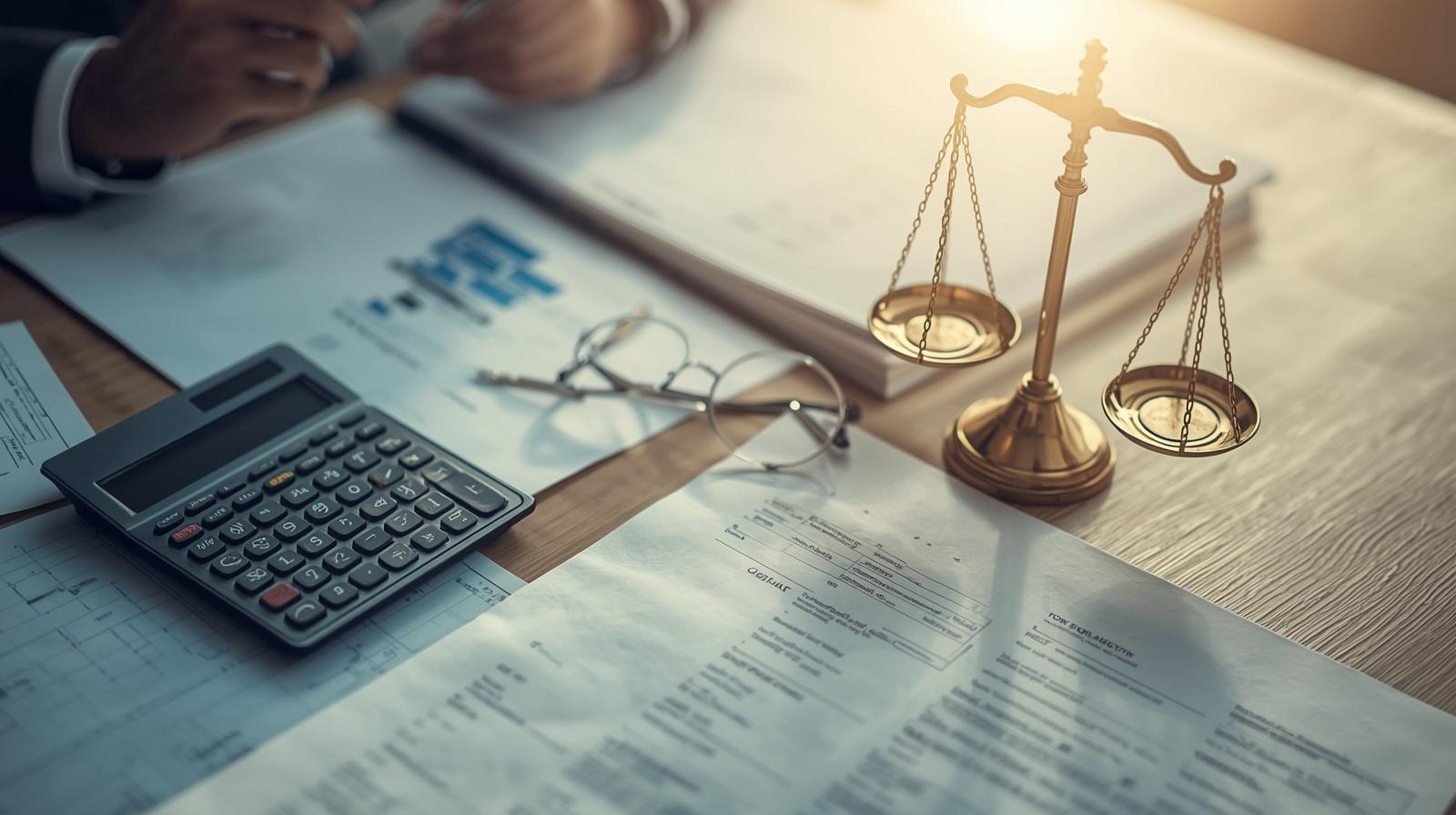
In our previous guides, we addressed how individuals can recover from property loss, personal injuries and emotional suffering. However, for company owners and legal entities, damage is often calculated in spreadsheets rather than medical reports. When a business partner fails to deliver, or a competitor’s actions halt your operations, the impact isn’t just physical—it’s a direct blow to your company’s growth and market position.
Under the Law on Contracts and Torts, the legal protection of business interests is built on the principle of full compensation. The goal is to place your business in the financial position it would have occupied had the harmful event or breach of contract never occurred.
📜 Breach of Contract: When Agreements Fail
When negotiating business agreements, a contract serves as your primary promise of stability. If that promise is broken, the law provides clear mechanisms to address the failure of a party to fulfill their obligations
Contractual Liability: A party that fails to fulfill its obligations, or delays in doing so, is responsible for the resulting damage. This applies whether the breach was intentional or the result of gross negligence.
Material and Legal Defects: If you purchase equipment that does not function as promised, the seller is liable for material defects. Similarly, if you acquire property burdened by a third party’s legal claim, the seller is liable for legal defects that restrict your rights.
📉 Lost Profits (Lucrum Cessans): The Profit That Never Was
One of the most complex and critical areas of business litigation is recovering lost profits. It is vital to recognize that your legal right to compensation extends beyond what you have physically lost to include the wealth you were prevented from acquiring.
Reasonable Expectation: To successfully claim lost profits, it must be proven that the gain could have been reasonably expected according to the regular course of events or specific circumstances.
Business Interruption: If a supplier’s delay or a third party’s harmful act forces your production line to stop, the law allows you to claim the net profit that the business would have generated during that downtime
🏢Damage to Business Reputation
A company’s reputation and its visual identity—branding and trademarks—are often its most valuable assets. Because these intangible assets drive market value, the law provides specific protections against actions that cause tangible financial harm.
Defamation and Branding: If a competitor or media outlet broadcasts untruths about your business’s capabilities or past, that lead to a cancellation of orders or a drop in brand value – the responsible party is obliged to compensate for the resulting material damage.
Trademark Infringement: When your trademark is used without authorization, it creates market confusion and dilutes your brand’s prestige. Legal protection ensures that you can seek compensation for the loss of exclusivity and any profit the infringer gained at your expense.
Quality and Licensing: If your brand is used under a license, the law requires that products maintain the same quality as the licensor’s to prevent the trademark devaluation. Failure to do so can lead to claims for damage to the brand’s integrity.
💰 Contractual Penalties and Interest
When drafting an agreement, it is important to understand the nature of the contractual penalty and the specific value you are protecting when negotiating it. Rather than leaving recovery to chance, this tool allows you to pre-define the consequences of non-performance or delay. Here are some of the main characteristics of this protective mechanism:
Fixed Recovery: You can agree on a specific sum or percentage to be paid if a partner fails to perform. This simplifies recovery as you are entitled to the penalty even if you suffered no actual damage.
Challenging the Amount: The law provides a safeguard for the debtor; if a court finds that the penalty is disproportionately high given the value and significance of the obligation, it has the power to reduce it to a fair amount.
Real Damage vs. Penalty: If your actual damage exceeds the amount of the agreed penalty, you are not limited to that fixed sum. You are entitled to prove the extent of the real loss and request the difference between the penalty and the total amount of the damage to ensure full compensation.
The Practice of Proving Commercial Damage
Proving a business loss requires high precision, as the law assesses compensation based on facts that were known or should have been known as possible consequences of a breach.
📊 Economic Forensics: We utilize economic and financial experts to analyze historical data and market trends to calculate the exact amount of lost profit.
📂 Documentary Evidence: Every email, invoice, and purchase order serves as a building block for your claim to prove what was expected versus what occurred.
🔎 Foreseeability: In contractual disputes, compensation is generally limited to the damage that the breaching party could have foreseen at the time the contract was signed.
Conclusion
For a company owner, litigation is a business decision. Our approach focuses on recovering every cent of “actual loss” and “lost profit” your company is legally owed, ensuring your legal strategy is as rigorous as your business plan.
Is a breach of contract or business interruption threatening your bottom line? Contact our commercial litigation team for a strategic review of your recovery options.
Note: This text provides general information and does not constitute legal advice. For specific questions and legal advice, please consult a lawyer.

Author
Vojislav S. Dulić
Vojislav Dulić is an attorney at law born in Herceg Novi, specifically in the town of Bijela.
He successfully completed his primary and secondary education in Geneva, thus acquiring an international education and perspective that further enriches his practice. Upon returning to Serbia, he further honed his knowledge and skills by practicing law in Belgrade, where he had the opportunity to work on various complex cases at a prestigious law firm.
He further complemented his practice by working in Geneva, within various branches of law. He speaks English, French, and Italian.
He is a member of the Belgrade Bar Association.
How can we help you?
Fill out the form below to contact us.
Our team will reply as soon as possible.