

Defending Your Reputation: An Attorney’s Insights into Serbian Media Law
Individual Rights vs. Press Freedom: Media Law in Serbia
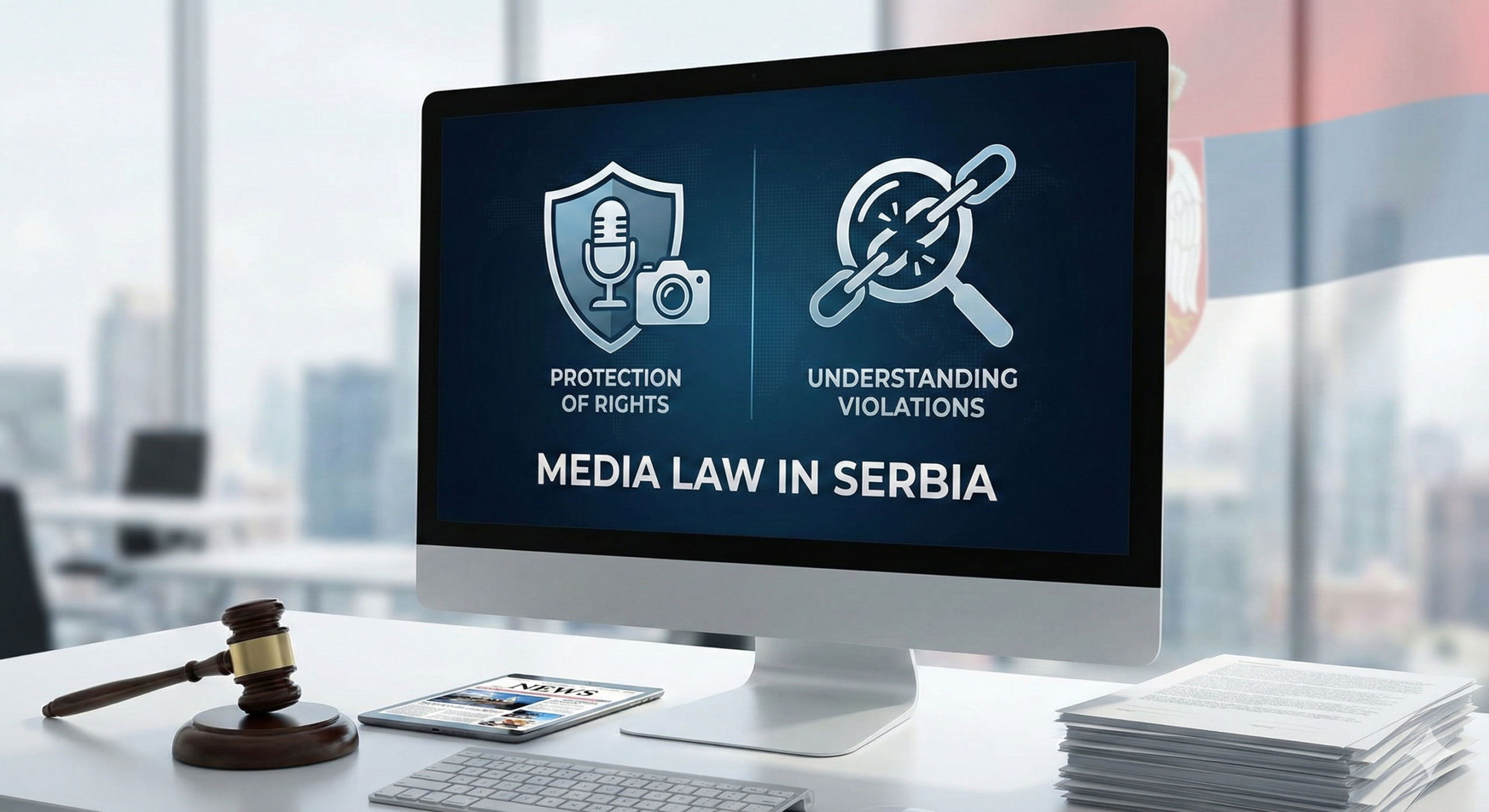
In Serbia’s legal system, the law creates a vital balance: protecting the freedom of the press while ensuring that no individual’s dignity or privacy is sacrificed for a headline. Understanding these statutory boundaries is the first step in recognizing when a line has been crossed and knowing exactly what the law protects.
Protected Personal Rights
Serbian law recognizes that personal identity and public standing are valuable assets. Several key rights are explicitly protected:
- The Right to Truthful Information: Everyone has the right to be informed truthfully, completely, and in a timely manner about matters of public importance.
- Dignity, Honor, and Reputation: The law safeguards your “pijetet” (piety/legacy), honor (your own sense of worth), and reputation (how others see you).
- The Right to Privacy: Your private life, personal records (like diaries or digital messages), and your physical image or voice are protected from unauthorized publication.
- The Presumption of Innocence: No one can be labeled as a perpetrator or declared guilty of a crime in the media before a final court verdict is reached.
- Protection of Minors: Strict requirements ensure that media content does not harm the moral, emotional, or social development of children.
Legal Violations by Media Outlets
A legal violation is not just about “bad news”; it occurs when a media outlet fails to meet specific legal standards. A violation typically occurs in the following scenarios:
- Breach of Journalistic Diligence: If an editor or journalist fails to verify the origin and truthfulness of information with professional care before publishing.
- Unlawful Exposure of Private Life: When a media outlet publishes information about your family or private affairs without your consent, lacking genuine public interest.
- Defamation and False Light: Publishing information that portrays a person in a “false light” by attributing traits they do not have or denying qualities they possess.
- Incitement of Hatred or Violence: The law strictly prohibits publishing information that encourages discrimination or violence based on race, religion, gender, or other personal traits.
- Violating the Dignity of Victims: Describing or showing scenes of violence in a way that disrespects the dignity of the victim.
The “Public Interest” Standard
In Serbia, elected or appointed officials must endure a higher level of public scrutiny. However, the media cannot publish private details of public figures unless they can prove the information is relevant to the public’s right to know.
Key Takeaway: A violation occurs whenever the interest in publishing information does not outweigh the interest in protecting an individual’s dignity or privacy.
Conclusion: Fast Action is Vital
If media content violates your privacy or involves defamation, you must act immediately. Serbian law enforces strict, short deadlines that can permanently end your right to seek justice.
For a detailed breakdown of your options, see our next guide regarding Defamation Lawsuits & Claiming Financial Damages. Contact an attorney-at-law now to protect your interests before these legal windows close.
Note: This text provides general information and does not constitute legal advice. For specific questions and legal advice, please consult a lawyer.

Author
Vojislav S. Dulić
Vojislav Dulić is an attorney at law born in Herceg Novi, specifically in the town of Bijela.
He successfully completed his primary and secondary education in Geneva, thus acquiring an international education and perspective that further enriches his practice. Upon returning to Serbia, he further honed his knowledge and skills by practicing law in Belgrade, where he had the opportunity to work on various complex cases at a prestigious law firm.
He further complemented his practice by working in Geneva, within various branches of law. He speaks English, French, and Italian.
He is a member of the Belgrade Bar Association.
How can we help you?
Fill out the form below to contact us.
Our team will reply as soon as possible.